The Ultimate Miami Beach Real Estate Guide 2025: Luxury Condos, Waterfront Homes & Market Trends | The Arango Group Home › Resources › Miami Beach Real Estate 2025 Market Guide Miami Beach Real Estate: Condos, Prices & Investment Guide The definitive Miami Beach real estate guide for 2025 — oceanfront condos, South Beach vs. Mid-Beach…
Miami Beach
Real Estate:
Condos, Prices
& Investment Guide
The definitive Miami Beach real estate guide for 2025 — oceanfront condos, South Beach vs. Mid-Beach pricing, short-term rental strategy, and expert market analysis from Miami's most experienced agents.
Why Miami Beach Real Estate Is Florida's Most Globally Recognized Market
Miami Beach real estate is unlike any other residential market in Florida — and arguably in the United States. A 7-mile barrier island bordered by the Atlantic Ocean to the east and Biscayne Bay to the west, Miami Beach combines oceanfront supply scarcity, a globally recognized brand that drives consistent international capital flows, and the most established short-term rental ecosystem in the Southeast. In 2025, Miami Beach continues to attract ultra-high-net-worth buyers from Latin America, Europe, and Canada; domestic relocators from New York, Los Angeles, and Chicago; and investors targeting a market where oceanfront supply cannot be replicated and where global demand provides a pricing floor independent of domestic economic cycles.
For buyers who want the rare convergence of world-class beaches, investment-grade rental income potential, and a trophy asset that holds value through market cycles — Miami Beach real estate delivers what no other Florida market can offer.
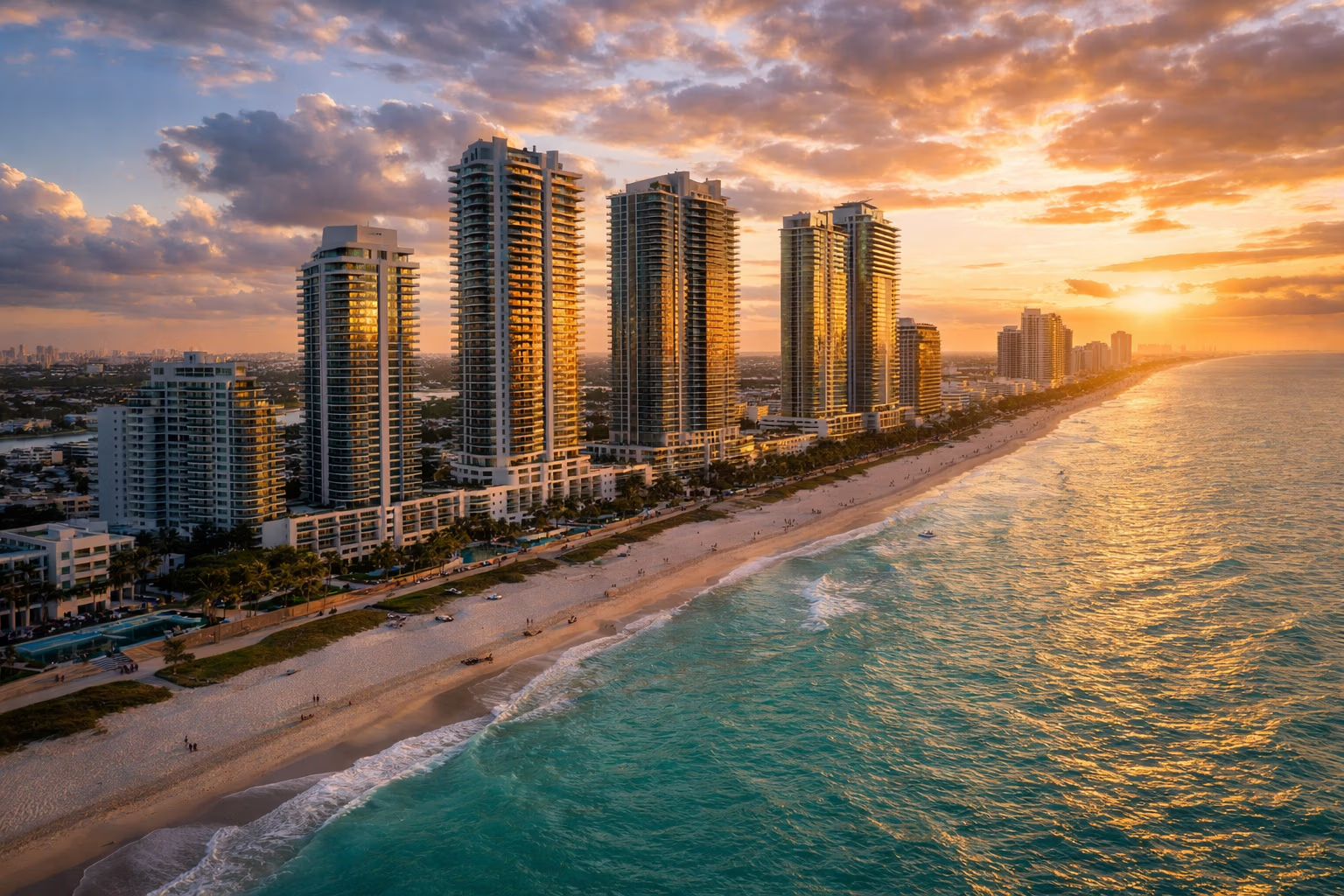
Miami Beach real estate is defined by three structural advantages no other Florida market delivers simultaneously: oceanfront and bayfront supply that is physically constrained and cannot be reproduced, an international buyer base that sustains pricing through domestic market cycles, and a short-term rental ecosystem in eligible buildings that can generate gross yields of 5–8% — far exceeding what a traditional annual-lease residential investment delivers in South Florida.
Understanding Miami Beach real estate requires understanding that "Miami Beach" is not a single market — it is a collection of distinct micro-neighborhoods, each with its own price point, rental policy, building character, and buyer profile. South Beach (1st–23rd Street), Mid-Beach (23rd–63rd Street), North Beach (63rd Street and above), Sunset Harbour, South of Fifth, Surfside, and the ultra-luxury island communities of Star Island, Palm Island, and the Venetian Islands each operate on different fundamentals. Kevin Arango, P.A. has served buyers and sellers across every segment for over 30 years.
Miami Beach real estate is not a local market — it's a global one. When a buyer from São Paulo or London chooses Miami Beach over comparable assets in New York, London, or Dubai, they're telling you something important about the long-term value proposition. That international demand doesn't disappear in a domestic downturn.
Kevin Arango, P.A. — The Arango Group, Coldwell Banker RealtyWhat Makes Miami Beach Real Estate Structurally Different
- Physically constrained supply — Miami Beach is a barrier island. There is no new oceanfront land. Every unit in an oceanfront or bay-view building sits on a non-replicable footprint; new luxury tower deliveries compete for the same limited sites, which is why Miami Beach has historically resisted the supply-glut cycles that affect suburban Miami-Dade
- Art Deco Historic District — South Beach's protected architectural corridor from 5th to 23rd Street is a UNESCO-recognized heritage zone; no demolition or incompatible development is permitted, creating a permanent supply constraint that sustains premium pricing in the heart of South Beach
- Short-term rental ecosystem — Miami Beach has the most established vacation rental market in Florida; condo-hotel buildings on Collins Avenue legally operate short-term rentals with hotel management programs; investors in eligible buildings can target gross STR yields of 5–8%, significantly higher than the 3–5% achievable on an annual-lease Brickell condo
- International buyer base — Latin American, European, and Canadian buyers have treated Miami Beach real estate as a primary store of value for decades; this sustained international capital flow provides a pricing floor that does not correlate with U.S. domestic economic cycles
- Ultra-luxury island communities — Star Island, Palm Island, Hibiscus Island, and the Venetian Islands offer waterfront single-family estates that compete with the world's most exclusive addresses; these assets are genuinely irreplaceable and attract UHNW buyers for whom price is a secondary consideration
- Walk Score 88+ — Lincoln Road, Ocean Drive, Española Way, and the growing Sunset Harbour corridor deliver a walkable urban lifestyle that South Florida's suburban markets cannot match; this walkability premium is a consistent driver for buyers relocating from New York, Chicago, and Los Angeles
- Cultural and lifestyle infrastructure — Art Basel Miami Beach, the Miami Beach Convention Center, the New World Symphony, and a globally recognized dining and nightlife scene make Miami Beach a year-round destination that sustains rental demand beyond peak tourist season
Miami Beach Real Estate by Neighborhood: Where Does Your Budget Fit?
Choosing where to buy in Miami Beach is not simply a budget decision — it is a lifestyle and investment strategy decision. Each of Miami Beach's distinct micro-neighborhoods offers a different combination of price point, building character, rental policy, and long-term appreciation profile. Understanding these differences is the first filter in any intelligent Miami Beach real estate acquisition.
South of Fifth Street is South Beach's quietest, most residential, and most prestigious micro-neighborhood. Continuum, Apogee, Murano Grande, and Glass occupy this short corridor. Almost entirely residential — minimal nightlife, no Ocean Drive noise — and the preferred address for buyers who want South Beach prestige with Coconut Grove privacy.
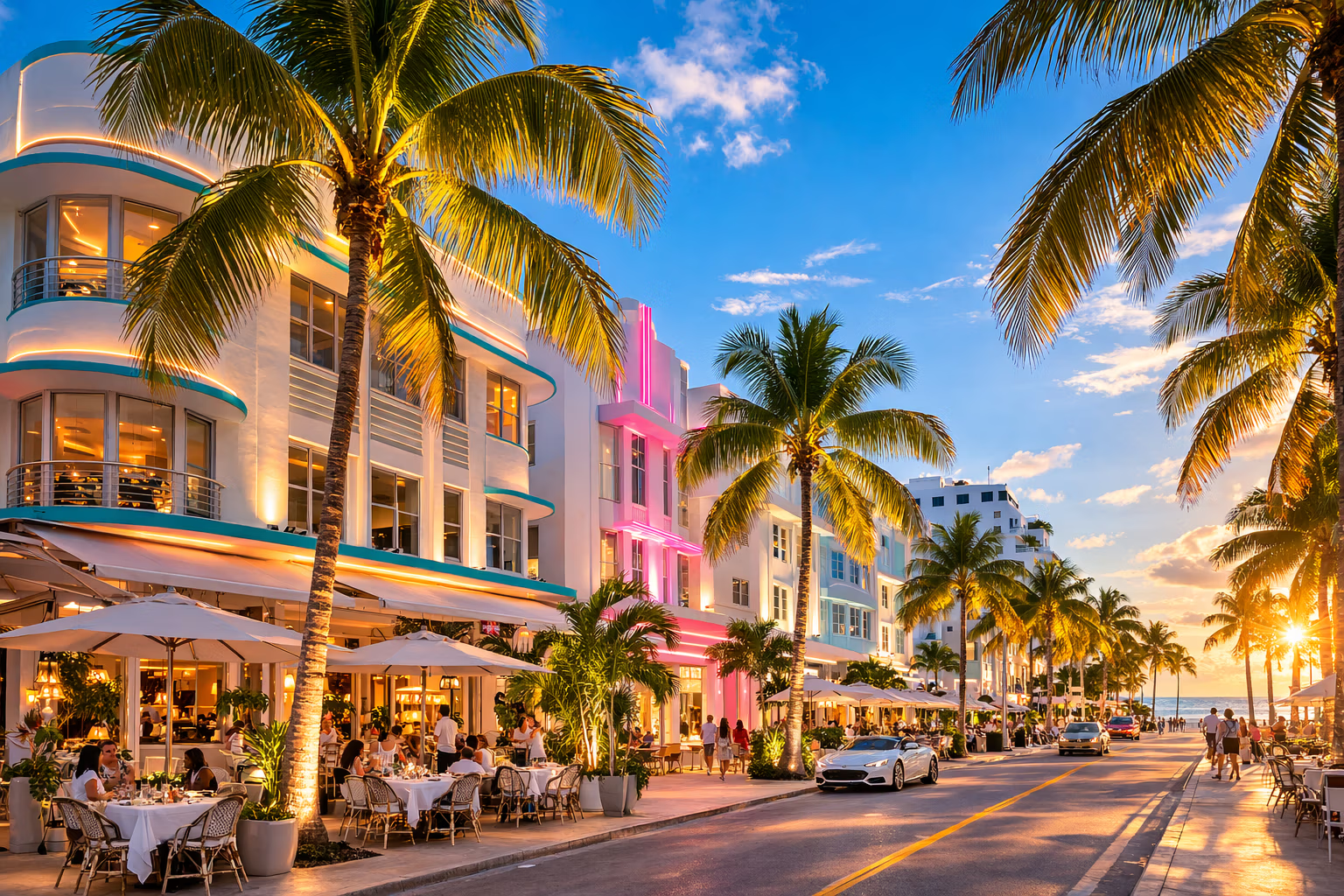
South Beach is Miami Beach's most globally branded corridor — Ocean Drive, Collins Avenue, Lincoln Road, and the Art Deco Historic District. Highest short-term rental demand, strongest vacation rental income potential, and the most diverse building inventory from boutique Art Deco conversions to modern luxury towers. W South Beach, 1 Hotel & Homes, and Icon South Beach anchor the luxury tier.
Mid-Beach commands the highest per-square-foot pricing in Miami Beach real estate. Faena House, Edition Residences, Fasano, and Porsche Design Tower define this corridor — newer, taller, and quieter than South Beach. The buyer here is not looking for Ocean Drive access; they are looking for private beach club service, ocean views from the 40th floor, and a more residential, family-appropriate environment.
North Beach offers the strongest value entry point in Miami Beach real estate — lower price-per-square-foot, an emerging restaurant corridor centered on 71st Street and Normandy Isle, and a more residential, community-oriented character. Buyers priced out of South Beach and Mid-Beach are discovering North Beach as a long-term appreciation play ahead of the next development wave.
Sunset Harbour is Miami Beach's most walkable residential enclave outside of South Beach proper — Whole Foods, SoulCycle, Nautilus Diner, Icebox Café, and a growing roster of boutique restaurants within two blocks. Bayfront views, a quieter residential character, and strong annual rental demand make Sunset Harbour one of Miami Beach real estate's most compelling value propositions for long-term investors and end-users alike.
Star Island, Palm Island, Hibiscus Island, and the Venetian Islands (Di Lido, San Marino, Rivo Alto, Belle Isle) represent Miami Beach real estate's trophy single-family tier. Gated, waterfront, and virtually zero new land supply. These assets attract UHNW buyers globally — celebrities, hedge fund managers, and international capital — and have historically maintained value through every market cycle in Miami's history.
Miami Beach vs. Comparable South Florida Markets
| Neighborhood | Condo Price Range | Walk Score | HOA Range/Mo | STR Policy |
|---|---|---|---|---|
| Miami Beach (SoFi / SoBe) | $500K – $15M+ | 88–96 | $900–$6,000+ | Bldg/city regulated |
| Miami Beach (Mid-Beach) | $1.2M – $15M+ | 82 | $1,500–$7,000+ | Mostly annual |
| Brickell | $420K – $8M+ | 90+ | $800–$4,500+ | Varies by bldg |
| Edgewater / Midtown | $380K – $3M+ | 82 | $700–$3,000 | Often flexible |
| Surfside / Bal Harbour | $600K – $10M+ | 72 | $1,200–$5,000 | Mostly annual |
Miami Beach Condo Prices: What to Expect in 2025
Miami Beach Condo & Home Prices by Unit Type
| Unit Type / Tier | Price Range (2025) | Market Conditions |
|---|---|---|
| Studio — Entry (North Beach / SoBe mid-rise) | $500K – $720K | Strong investor demand; limited inventory |
| 1 Bedroom — South Beach / Sunset Harbour | $650K – $1.3M | Competitive; 45–65 DOM |
| 2 Bedroom — Luxury (South Beach / SoFi) | $1.2M – $4M | End-user + investor; seller's market |
| 2 Bedroom — Ultra-Luxury (Mid-Beach / SoFi) | $2.5M – $7M | Global buyer; limited comparable inventory |
| 3 Bedroom — SoFi / Faena / Edition tier | $3.5M – $10M+ | Discerning buyer; very limited supply |
| Penthouse / Full Floor | $6M – $15M+ | Long DOM; global UHNW buyer |
| Waterfront Single Family (Star Island / Venetians) | $5M – $50M+ | Trophy tier; no true comparables |
| Price Per Sq. Ft. — Standard Condo | $700 – $1,200 | Varies by building age & floor |
| Price Per Sq. Ft. — Oceanfront / New Luxury | $1,200 – $3,500+ | Premium for direct ocean view & amenities |
| Avg. Days on Market | 50 – 90 days | Correctly priced units; luxury tiers longer |
Data reflects general MLS resale trends for Miami Beach micro-markets, per Miami REALTORS® Q1 2026 data. Pre-construction pricing varies by developer. Contact Kevin Arango for a unit-specific CMA. County-wide data: Miami REALTORS® monthly reports.
HOA Fees: The Cost Driver Most Buyers Underestimate
⚡ Key Insight: HOA Fees Are Higher in Miami Beach Than Anywhere Else in Miami-Dade
Miami Beach condo HOA fees run significantly higher than comparable Brickell or Edgewater buildings — full-service luxury towers in South of Fifth and Mid-Beach routinely carry $3,500–$7,000+/month in maintenance fees that include beach club service, valet, concierge, and resort-caliber amenities. Even mid-tier South Beach buildings carry $1,000–$2,500/month. Always model HOA fees as your primary recurring cost — not a footnote to the purchase price. A $1.5M South of Fifth unit with a $4,500/month HOA has the same annual carrying cost as owning a considerably more expensive asset in a lower-HOA building.
Post-Surfside legislation (SB 4-D) requires buildings three stories and taller to fund structural integrity reserves to 100% of reserve study requirements. Miami Beach's older building inventory — particularly Art Deco-era buildings and 1970s–1990s mid-rises — faces the most material reserve assessment exposure. Review reserve fund status before any offer.
The Florida homestead exemption applies to primary-residence condo owners in Miami Beach, providing meaningful property tax savings and Save Our Homes protection on assessed value increases. For investor-owned units, no homestead benefit applies — and assessed values can reset significantly at sale on long-held units where the previous owner's cap has suppressed their tax bill for years. Model the tax reset in any acquisition analysis before submitting an offer.
Living in Miami Beach: Beaches, Culture, Walkability & Community
What Miami Beach Lifestyle Actually Delivers
Miami Beach real estate buyers are not simply purchasing a home — they are purchasing access to one of the world's most recognized lifestyle destinations. The combination of Atlantic Ocean beach access, Biscayne Bay water sports, a globally curated food and cultural scene, and an urban walkability score above 88 creates a lifestyle proposition that no other Florida market comes close to matching.
- 12 miles of Atlantic beach access — every Miami Beach resident is within walking distance of the Atlantic Ocean; public beach access points from South Pointe Park to Surfside are maintained by the city and provide a lifestyle amenity that is literally non-replicable anywhere inland
- Lincoln Road Mall — Miami Beach's premier pedestrian shopping and dining corridor; outdoor restaurants, boutique retail, weekend farmer's markets, and live entertainment; the social spine of South Beach that draws end-users and tourists simultaneously and sustains year-round retail demand
- Art Basel Miami Beach — the world's most important art fair held annually in December; Art Basel week drives peak STR rental rates and permanently positions Miami Beach as a global cultural capital alongside New York, London, and Paris
- South Pointe Park & the Beachwalk — a 20-mile continuous oceanfront pedestrian and cycling path that runs from South Pointe Park to Sunny Isles; Miami Beach's premier outdoor recreation infrastructure and one of the defining lifestyle amenities that drives end-user demand in SoFi and South Beach
- Sunset Harbour dining and wellness corridor — Whole Foods, SoulCycle, Barry's Bootcamp, Icebox Café, and a growing roster of chef-driven restaurants have transformed Sunset Harbour into Miami Beach's most livable daily-life district; a primary driver for professionals and families who want Miami Beach access without South Beach nightlife proximity
- Pérez Art Museum Miami (PAMM) and Frost Museum — both institutions are a short drive or Metromover ride across the MacArthur Causeway; Miami Beach's cultural infrastructure extends into downtown Miami and reinforces the lifestyle value for buyers coming from culturally sophisticated cities
- Biscayne Bay water access — the bay-side of Miami Beach offers boat slips, kayak launch points, and waterfront dining that is separate from the oceanfront; properties on the bay-facing side of the island — particularly in Sunset Harbour, Belle Isle, and the Venetian Islands — command a sustained water-view premium
The Miami Beach buyer in 2025 is sophisticated. They've lived in great cities. They know what a walkable neighborhood feels like, what beach access means when it's genuine — not a 40-minute drive — and what it means to invest in a market where the supply story is irreversible. That's the Miami Beach proposition.
Kevin Arango, P.A. — The Arango Group, Coldwell Banker RealtyMiami Beach and Schools: What Families Need to Know
Miami Beach public schools — primarily Miami Beach Senior High and Nautilus Middle — serve the island's residential population. School quality is mixed compared to the A-rated pipeline in South Miami-Dade communities like Pinecrest and Palmetto Bay. Families with school-age children who prioritize both the Miami Beach lifestyle and A-rated public school access should use the Miami-Dade School Locator at the parcel level before finalizing any purchase decision.
Several strong private school options are accessible from Miami Beach — including Miami Country Day School (North Miami Beach), Ransom Everglades in Coconut Grove, and several independent K–8 schools on the island itself. Families consistently use Miami Beach real estate as a primary residence while managing private school logistics separately — a tradeoff many find worthwhile given the lifestyle premium.
Buying Miami Beach Real Estate: The 2025 Condo Due Diligence Guide
Miami Beach real estate purchases require a more rigorous due diligence process than almost any other Florida market. Between the city's short-term rental licensing regime, the post-Surfside structural reserve mandates, the complexity of condo-hotel management structures, and the flood exposure of a barrier island, the building itself carries as much risk — and opportunity — as the individual unit. Buyers who understand this layer outperform those who do not.
Define Your Use Case: Vacation Rental, Annual Investment, or Primary Residence
Miami Beach real estate serves three distinct buyer profiles, and the optimal building for each is fundamentally different. Vacation rental investors need a building with verified short-term rental eligibility, a professional management program, and hotel-level amenities that justify nightly rates. Annual rental investors need flexible 12-month lease policies, strong occupancy fundamentals, and competitive HOA-to-rent ratios. Primary residence buyers prioritize building quality, beach access, view orientation, and lifestyle fit over yield metrics.
Many of Miami Beach's most desirable lifestyle buildings — Faena House, Continuum, Apogee — carry rental restrictions or management structures that are incompatible with short-term rental investment. Define your use case before you tour, or you will fall in love with a building that does not match your financial model.
Verify Short-Term Rental Eligibility — Both Building and City
Miami Beach's short-term rental regulatory environment is the most complex in Florida. The city requires a Certificate of Use for any rental under six months and one day, and enforcement has increased significantly since 2023. Building-level STR eligibility varies dramatically:
- Condo-hotel buildings (W South Beach, 1 Hotel & Homes, Mondrian, Shelborne South Beach) legally operate hotel management programs that include STR; buyers in these buildings participate in the rental pool and receive a share of nightly revenue minus management fees
- Standard residential condos with liberal rental policies may allow rentals of 30 days or more, but are not eligible for true nightly STR operation; verify the minimum lease period in the Declaration of Condominium before assuming vacation rental income
- Restricted residential buildings (Continuum, Apogee, most of SoFi) prohibit short-term rentals entirely and impose 6–12 month minimum lease requirements; ideal for end-users and annual renters, not vacation rental investors
Review Building Financials and Reserve Fund Status Thoroughly
Under Florida's Condo Act and post-Surfside SB 4-D, all condominium associations three stories and taller must complete structural integrity reserve studies and fund reserves to compliance. Miami Beach's older building inventory is where this risk concentrates — Art Deco-era conversions, 1960s–1980s Collins Avenue mid-rises, and any building that has deferred maintenance create meaningful special assessment exposure for buyers.
- Reserve fund adequacy: Request the most recent reserve study and confirm the funding percentage; buildings below 70% funded face mandatory remediation and potential special assessments that transfer with the unit
- Structural integrity inspection status: Florida now mandates milestone inspections for buildings 30+ years old within 3 miles of the coast; confirm the building's inspection status before contract
- Meeting minutes (3 years): Three years of HOA board meeting minutes will surface deferred maintenance, insurance disputes, management company conflicts, and pending litigation that no listing disclosure requires
- Flood insurance (NFIP vs. private): Verify the building's master flood insurance coverage and whether it meets current NFIP standards; Miami Beach's barrier island location means flood exposure is higher than mainland Miami-Dade
Understand Condo-Hotel Management Structures Before You Buy
Condo-hotel buildings — the Collins Avenue towers with hotel flags and management programs — operate under a fundamentally different ownership model than standard residential condos. Buyers in these buildings do not simply own their unit; they participate in a rental program governed by a management agreement with the hotel operator that dictates occupancy windows, revenue splits, maintenance access, and owner use restrictions.
Before purchasing in any Miami Beach condo-hotel building, obtain and review the hotel management agreement in full. Understand your owner-use window (typically 30–90 days per year), the revenue split structure (usually 45–55% to the owner), and any exclusivity requirements that prevent you from listing the unit on Airbnb or VRBO outside the hotel program. These terms vary dramatically by operator and materially affect your net yield and personal enjoyment of the asset.
Model Total Cost of Ownership — Miami Beach Has More Variables Than Any Florida Market
- HOA monthly fee: $900–$7,000+/month depending on building and unit size; always verify the current fee in writing — condo-hotel buildings often charge additional management fees beyond the base HOA
- Property taxes: Miami-Dade millage applies; homestead exemption available for primary residents; investor-owned units have no homestead benefit and assessed values reset at sale — verify at the Miami-Dade Property Appraiser
- HO-6 condo insurance: Interior unit coverage is the owner's responsibility; premiums run $2,000–$6,000+/year in Miami Beach reflecting hurricane and flood exposure on a barrier island
- Flood insurance: The building's master policy covers common areas and structure; verify whether individual unit flood coverage is required by your lender and what the NFIP vs. private market premium is for the specific building
- Special assessments: Pending or recently disclosed assessments should appear in the HOA estoppel; request the estoppel before contract and model any known assessments as acquisition costs, not seller credits to negotiate later
Warrantability and Financing: More Complex in Miami Beach Than Anywhere Else
Fannie Mae and Freddie Mac condo lending guidelines have tightened significantly post-Surfside. Miami Beach buildings face non-warrantable classification more frequently than mainland markets due to: investor concentration ratios exceeding 35–50%, active litigation against the association or developer, underfunded structural reserves, and building characteristics specific to condo-hotel operations (hotel flag buildings are almost always non-warrantable for conventional financing).
Non-warrantable does not mean unfinanceable — it means you are limited to portfolio lenders at higher interest rates, which affects your cost of capital and the future buyer pool for the unit at resale. Run a warrantability check on any Miami Beach building before making any offer. Kevin Arango maintains building-specific warrantability intelligence that no automated tool or generalist agent can provide.
Work With a Miami Beach Specialist — The Intelligence Gap Is Larger Here Than Anywhere
Miami Beach real estate has more building-specific complexity than any other South Florida market: short-term rental eligibility by building, reserve fund status post-Surfside, condo-hotel management agreement terms, flood and hurricane insurance exposure by building age, and the warrantability status of a market where many of the most desirable buildings are non-warrantable for conventional financing.
Generalist representation in the Miami Beach condo market is a structural disadvantage that translates directly into financial exposure. Contact Kevin Arango at (305) 290-1211 for a building-specific consultation before you make any offer anywhere on Miami Beach.
Selling Miami Beach Real Estate: How to Maximize Your Net in 2025
Pricing Against a Sophisticated Buyer Pool
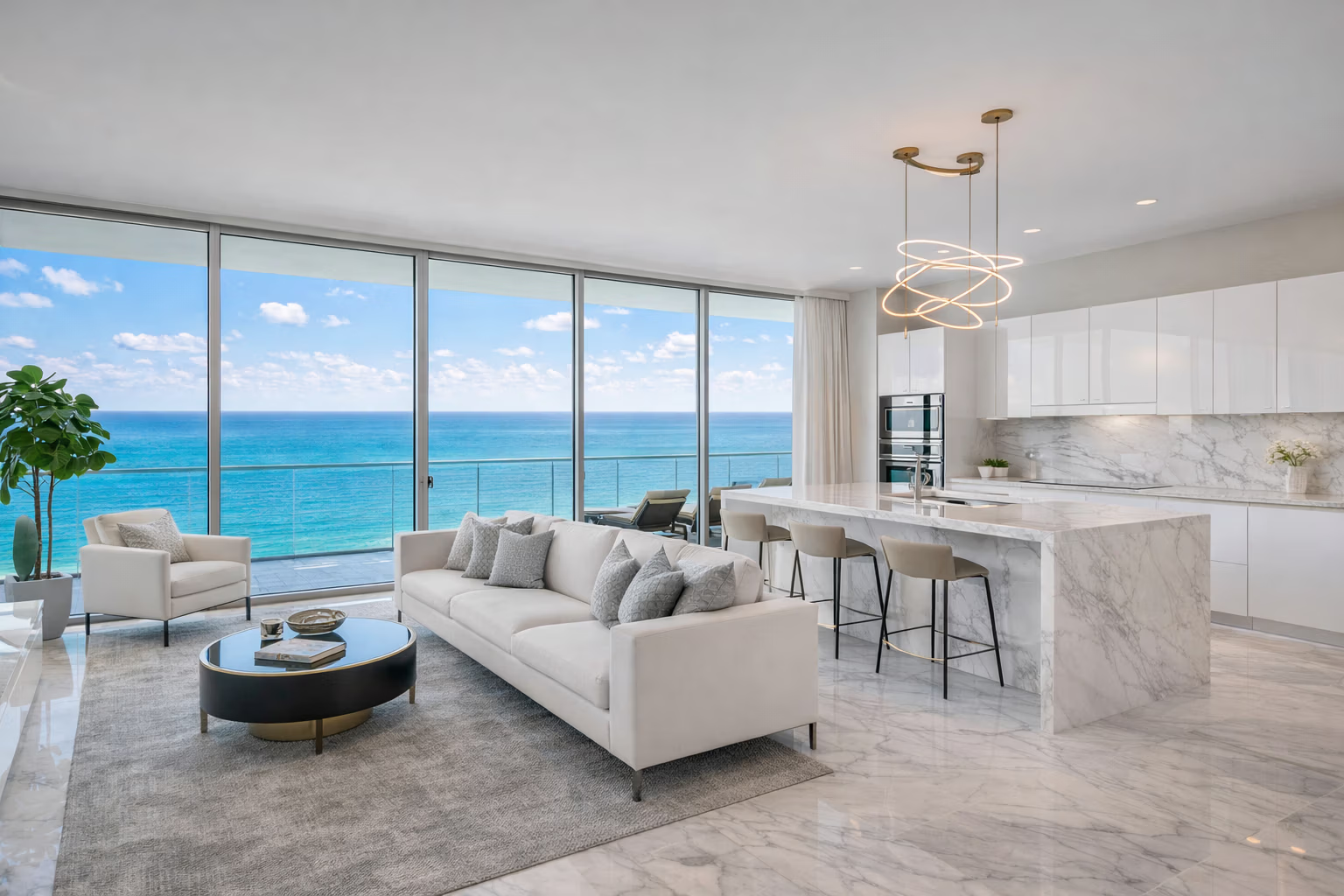
Miami Beach real estate sellers face a more sophisticated buyer pool than any other Miami-Dade market. International buyers — particularly Latin American and European purchasers — conduct exhaustive digital due diligence, compare your unit against global luxury benchmarks, and are acutely sensitive to overpricing relative to comparable sales data. A unit priced 10% above market in Brickell may still find a buyer — in Miami Beach's Mid-Beach or South of Fifth tier, that same mispricing produces 90+ days on market and an ultimate sale price that underperforms what a correct initial price would have achieved.
The competitive pressure is compounded by new development inventory — Faena, Edition, and incoming luxury tower deliveries provide competing product with developer marketing budgets, model units, and incentive packages that resale sellers cannot match. The resale advantage is immediate occupancy, established building track record, and often a lower cost per square foot than new construction equivalents. A specialist listing agent quantifies and markets these advantages — a generalist simply posts the listing and waits.
The international Miami Beach buyer is not unsophisticated. They have access to the same MLS data you do, they've probably toured comparable units in New York and London, and they will not overpay. The sellers who win are the ones who price correctly from day one and present the asset as the world-class property it actually is.
Kevin Arango, P.A. — The Arango GroupInternational Buyer Marketing Is Non-Negotiable
Miami Beach has the highest proportion of international buyers of any Miami-Dade market — Latin American, European, and Canadian purchasers who research and shortlist units entirely online before scheduling a Miami trip. Professional photography, 3D Matterport virtual tours, drone footage of ocean views, bay views, and building amenities, and multilingual marketing outreach are not optional extras for Miami Beach listings — they are the minimum standard for reaching the buyer pool that drives the highest prices in this market.
Kevin Arango's listings include complete professional media — photography, virtual tour, drone footage, and international marketing distribution — as standard at every Miami Beach price point. No upcharges, no budget photography, no exceptions.
Disclosure Preparation: Eliminate the Contract-Kill Risk
The most common cause of Miami Beach deal failures is a buyer discovering undisclosed building issues — structural reserve deficiencies, pending special assessments, active litigation, condo-hotel management agreement terms, or non-warrantability — after going under contract. In Miami Beach's international buyer market, these discoveries carry additional risk: a Latin American buyer who flies to Miami to tour a unit and discovers building issues post-contract does not simply accept a price reduction; they often terminate entirely.
Prepare your HOA estoppel, reserve fund status, building inspection reports, and any pending assessment disclosures before listing. Proactive disclosure eliminates the discovery risk that derails closings, and sophisticated buyers — and their attorneys — will find these issues anyway. Get ahead of it.
Best Time to List Miami Beach Real Estate
Miami Beach real estate has two distinct peak windows aligned to its international buyer base: November through April — Art Basel in December brings global capital to Miami Beach, and the winter season through April drives both domestic snowbird and international buyer activity to peak levels — and August through September, when corporate relocators and investors targeting Miami Beach as a primary residence lock in housing before year-end tax positioning. Call (305) 290-1211 for a listing timeline specific to your unit type, building, and target buyer profile.
Investing in Miami Beach Real Estate: What the Numbers Won't Tell You
The Short-Term Rental Yield Advantage — If You're in the Right Building
Miami Beach real estate investors who target eligible condo-hotel and vacation rental buildings can achieve gross STR yields of 5–8% annually — significantly higher than the 3–5% achievable on an annual-lease Brickell or Edgewater condo. This yield premium is driven by Miami Beach's position as a top-five U.S. vacation destination, Art Basel and event-week nightly rate spikes (often $1,500–$5,000+/night in prime South Beach buildings), and year-round demand from international visitors that sustains occupancy beyond the traditional snowbird season.
The critical qualifier is building eligibility. Not all Miami Beach buildings can legally deliver this yield — and the difference between an STR-eligible building and a restricted building is not always obvious from a listing sheet. This intelligence is building-specific and not available on any automated platform. Contact Kevin Arango for a verified list of Miami Beach buildings with confirmed short-term rental eligibility before acquiring any Miami Beach investment property.
The Oceanfront Supply Constraint: The Structural Case for Miami Beach Appreciation
Miami Beach's long-term appreciation case is built on a physical reality that no other Florida market can replicate: the island is fully built out. Every developable oceanfront site has been developed. New luxury towers deliver on the bay side and on mid-block sites, but genuine oceanfront frontage is exhausted. This supply constraint — combined with growing global demand for direct ocean access in a tax-advantaged U.S. jurisdiction — creates the fundamental long-term appreciation case for Miami Beach real estate that no suburban Florida market can match.
The Post-Surfside Value Divergence: Opportunity for Informed Buyers
Florida's post-Surfside legislation has created a material and growing divergence in Miami Beach condo values between well-reserved, structurally certified buildings and underfunded buildings facing mandatory assessment exposure. This divergence is most pronounced in Miami Beach's older inventory — Art Deco conversions, 1960s–1980s Collins Avenue mid-rises, and any building that has deferred structural maintenance.
This is an opportunity for informed buyers who can identify well-reserved buildings before the market fully prices the differential. Buildings with clean milestone inspection reports, 100%-funded reserves, and current structural certifications are quietly trading at a growing premium over buildings with known reserve deficiencies. Kevin Arango maintains a building-by-building reserve status assessment across Miami Beach's major condominium inventory — contact us before making any acquisition decision.
Flood Risk and Insurance: The Variable Every Miami Beach Investor Must Model
Miami Beach's barrier island location creates flood exposure that mainland Miami-Dade markets do not face at the same intensity. High-rise towers are structurally above flood risk, but parking structures, ground-floor storage, and garden-level units can be affected by tidal flooding and storm surge. The City of Miami Beach has invested over $500 million in sea-level rise infrastructure since 2012 — elevated roads, improved pump systems, and stormwater management — which has materially reduced nuisance flooding in most of South Beach and Sunset Harbour.
Flood insurance costs have increased significantly under FEMA's Risk Rating 2.0 methodology introduced in 2021, with the largest increases affecting properties in the highest-risk zones. Model current NFIP premium costs at FEMA's Flood Map Service Center before finalizing any Miami Beach acquisition. Buildings with private flood insurance options may offer premium relief relative to NFIP rates.
Additional Resources for Miami Beach Buyers and Investors
Verify property tax history at the Miami-Dade Property Appraiser. Review flood zone and insurance requirements at FEMA's Flood Map Service Center. Review Miami Beach short-term rental licensing requirements at City of Miami Beach STR Licensing. Review monthly market data at Miami REALTORS® monthly reports.
Miami Beach Real Estate: Frequently Asked Questions
Ready to Buy, Sell, or Invest
in Miami Beach Real Estate?
Whether you're acquiring your first Miami Beach condo, evaluating a condo-hotel investment, or selling a waterfront asset you've held through multiple market cycles — the right agent changes the outcome. Kevin Arango combines 30+ years of business expertise with deep hyperlocal knowledge across Miami's most dynamic markets. Visit www.thearangogroup.com to learn more.