The definitive guide to the Miami real estate market in 2025. Expert pricing data, neighborhood breakdowns, and insider strategies for buyers and sellers across Miami-Dade County. From Brickell condos to Coconut Grove waterfront estates — everything you need to make a confident move. Written by Kevin Arango, P.A., your South Florida real estate specialist.
The Definitive
Miami Real Estate Market
Report: 2025
Talk to a Miami Expert — (305) 290-1211
Why the Miami Real Estate Market Demands a Specialist
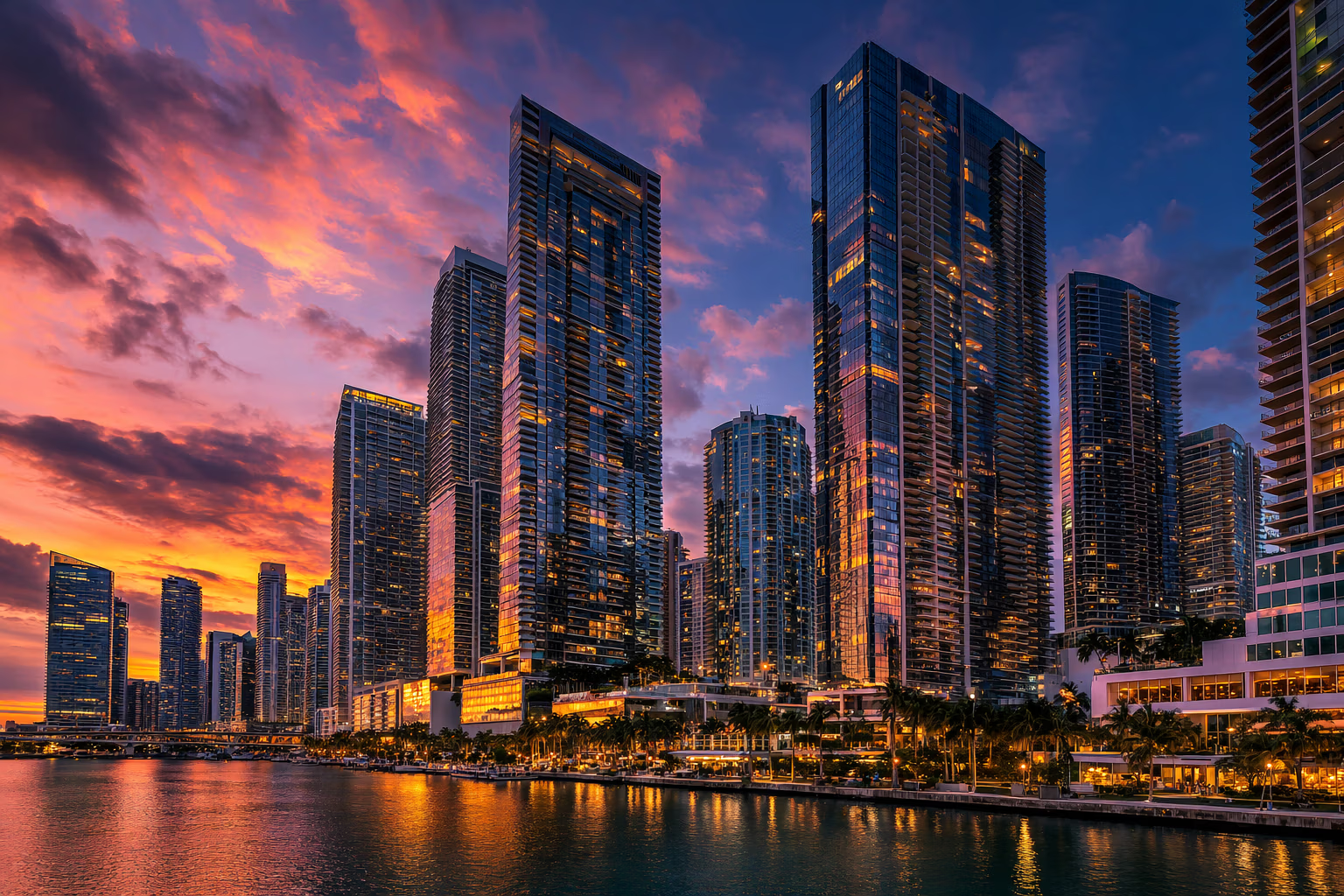
The Miami real estate market in 2025 is unlike any other in the United States. Whether you are buying a home in Miami, selling a waterfront estate, or investing in Miami properties for sale, understanding how this market works is essential. It is simultaneously a domestic relocation destination, an international capital-flows hub, a luxury tourism anchor, and one of the most undersupplied residential markets in the country. Understanding which of these forces is driving a specific sub-market — and when — is the difference between a well-timed transaction and an expensive mistake.
Miami-Dade County encompasses dozens of distinct micro-markets, each with its own price trajectory, buyer profile, and risk profile. Buyers and sellers who treat the Miami real estate market as a monolith routinely overpay, underprice, or miss the timing window entirely.
Kevin Arango, P.A. has worked this market full-time through multiple cycles. This guide consolidates everything buyers and sellers need to make confident decisions in 2025 — pricing benchmarks, neighborhood intelligence, buyer strategy, seller positioning, and the insider knowledge that algorithm-driven platforms simply cannot provide.
Miami doesn’t have a single real estate market. It has fifteen of them. The strategy that works in Brickell will not work in Coconut Grove, and the approach that wins in Palmetto Bay is irrelevant in Wynwood.
Kevin Arango, P.A. — The Arango GroupWhat Makes the Miami Real Estate Market Structurally Different
- No state income tax — Florida’s tax environment continues to drive relocation from New York, California, and Illinois, sustaining demand across every price point
- International capital flows — Latin American and European buyers treat Miami real estate as a stable dollar-denominated asset, providing a price floor that purely domestic markets lack
- Geographic supply constraint — Biscayne Bay to the east, the Everglades to the west; there is no room to sprawl, which permanently constrains new inventory in the most desirable areas
- Climate and lifestyle premium — year-round outdoor living, world-class dining, direct international flight access, and 300+ days of sunshine drive demand that survives rate cycles
- Short-term rental income potential — in permitted zones, Miami properties generate significant rental yield, supporting investor demand that keeps prices elevated even when primary buyer activity softens
- Luxury market depth — the $2M–$20M+ segment has genuine transaction volume, not the illiquid “luxury” listings that characterize most secondary markets
Miami Real Estate Market Snapshot: Prices & Conditions in 2025
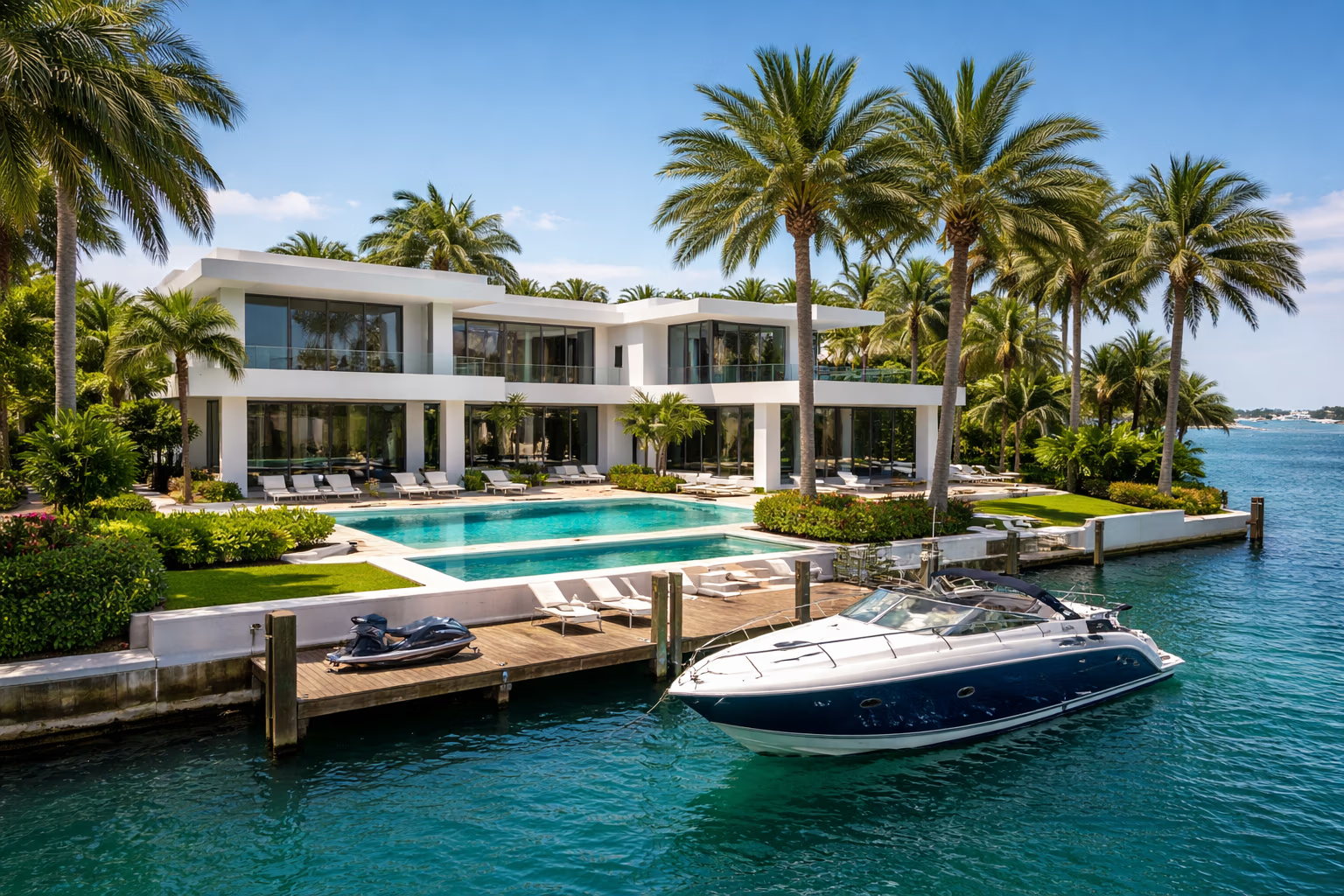
Miami Real Estate Market Pricing Overview by Segment
| Segment | Price Range (2025) | Conditions |
|---|---|---|
| Entry-Level Single Family | $500K – $680K | Competitive; low inventory |
| Mid-Market Single Family | $680K – $1.2M | Seller’s market; 28–45 DOM |
| Luxury Single Family | $1.2M – $4M | Active; qualified buyer pool strong |
| Ultra-Luxury ($4M+) | $4M – $30M+ | Brickell, Miami Beach, Coconut Grove |
| Condo — Brickell / Downtown | $450K – $1.8M | New supply; buyer negotiating room |
| Condo — Miami Beach | $600K – $5M+ | Brand-dependent; ultra-luxury active |
| Price Per Sq. Ft. — SFH | $380 – $620 | Varies by neighborhood & lot |
| Avg. Days on Market | 28 – 55 days | Correctly priced properties |
| Months of Supply | 1.5 – 2.5 months | Seller’s market across most segments |
Data reflects general MLS trends for Miami-Dade County. For current county-wide data, see Miami REALTORS® monthly market reports. Contact Kevin Arango for a property-specific CMA.
What the Miami Real Estate Market Numbers Don’t Tell You
Median prices and DOM averages mask the enormous variation within the Miami real estate market. A correctly priced home in Palmetto Bay’s Howard Drive K-8 school zone will receive multiple offers in under two weeks. A comparable home three blocks outside that zone may sit 60 days. Understanding which sub-market you are operating in — and which variables matter most to buyers in that sub-market — is what separates a specialist from a generalist agent.
Key Insight: The Insurance Variable
Florida’s property insurance environment has become a primary cost driver in the Miami real estate market. Wind policies, flood insurance, and four-point inspection results directly affect monthly ownership cost — sometimes by more than the mortgage rate differential. Always model the true cost of ownership before making an offer, and ensure your agent pulls flood zone designations from FEMA’s Flood Map Service Center before you commit.
Miami’s Top Neighborhoods: What Every Miami Real Estate Market Buyer Must Know
South Florida’s urban epicenter. High-rise condos, walkable dining and nightlife, proximity to international finance. Ideal for buyers prioritizing career access and investment yield. Watch for new condo supply affecting negotiating leverage.
Miami’s oldest neighborhood. Lush canopy streets, bayfront estates, galleries, and a walkable village center. Limited inventory and strong appreciation make it one of the most competitive sub-markets in Miami. See our Coral Gables guide for the adjacent market.
Iconic architecture, tree-lined boulevards, top-rated schools, and a walkable Miracle Mile. One of South Florida’s most prestigious addresses with consistent long-term appreciation and a deep luxury buyer pool.
South Beach, Mid-Beach, and North Beach each have distinct buyer profiles and price points. Brand-name buildings (Faena, Edition, Surf Club) command dramatic premiums. International buyer concentration creates both opportunity and volatility.
Top-rated schools, 17+ parks, canal and bayfront access — with no HOA in most properties. The best value-per-square-foot for waterfront living in the county. Explore our dedicated Palmetto Bay real estate agent guide.
Miami’s fastest-evolving urban corridors. Wynwood’s art district drives foot traffic and retail premiums. Edgewater offers bayfront condo access at a fraction of Miami Beach pricing. Ideal for investors and primary buyers who want urban energy with appreciation runway.
Half-to-1.5-acre lots, among the most prestigious school zones in Miami-Dade, and a quiet residential character. Favored by executives and families seeking space and privacy. Explore our Pinecrest real estate agent guide.
Strong school options, larger lots than urban Miami, and 20–35 minutes to Brickell. The entry point for buyers who want quality Miami-Dade living without the urban premium. Steady appreciation anchored by end-user demand.

Buying a Home in the Miami Real Estate Market: The 2025 Strategy Guide
Buying a home in Miami in 2025 requires a different approach than it did in 2020 or even 2022. The Miami real estate market has shifted — interest rates have moderated from their 2023 peaks, but inventory remains constrained across most desirable sub-markets. The buyers who win are the ones who come prepared — financially, informationally, and strategically.
Define Your Real Priority: Neighborhood or Features?
The single biggest mistake Miami buyers make is optimizing for square footage or finishes before locking in the right neighborhood and school zone. In Miami’s sub-market-driven world, a smaller home in the right location will outperform a larger home in the wrong zip code — every time. Work backward from your life priorities: school assignment, commute, lifestyle, and long-term appreciation path.
Get Full Pre-Approval — Not Just Pre-Qualification
In competitive Miami sub-markets, a pre-qualification letter is insufficient. You need a full underwritten pre-approval, and above $1.5M, most sellers require proof of funds before scheduling private showings. Do not start touring until your financing is fully validated. This process can take 5–10 business days, and waiting costs you deals.
Model the True Cost of Ownership
- Homeowner’s insurance (wind): $8,000–$25,000+/year depending on year built, roof condition, and flood zone
- Flood insurance: Mandatory in FEMA Special Flood Hazard Areas — always verify at FEMA’s Flood Map Service Center
- Property taxes: Miami-Dade millage plus municipal millage; homestead exemption applies to primary residents
- HOA / condo fees: In Brickell and Miami Beach, monthly fees of $800–$3,000 are common and must be factored into your DTI
- Reserve requirements: Post-Surfside legislation has changed condo reserve funding rules — get the financials before you go under contract
Verify School Zone at the Parcel Level
Miami’s school zone boundaries do not follow street lines. Two homes on the same block can feed into different schools, with a price differential of $80,000–$150,000. Always verify the exact attendance zone on the Miami-Dade School Locator before making any offer. Do not rely on neighborhood name, listing copy, or the seller’s representation.
Commission a Pre-Offer Contractor Walkthrough
Many Miami homes that appear move-in ready carry deferred maintenance that a formal inspection will surface — too late to renegotiate cleanly. A trusted contractor walkthrough before your formal inspection allows you to price risk into your offer structure upfront. Ask your agent for vetted referrals in the specific neighborhood you are targeting.
Understand the Four-Point Inspection — Before You Fall in Love
Florida insurance carriers assess four systems: roof age, electrical panel type, plumbing material, and HVAC condition. An aluminum wiring panel or polybutylene plumbing can make a home uninsurable with standard carriers — a deal-killer that many buyers discover after they are emotionally committed. Know what you’re buying before you’re under contract.
Work With a Hyperlocal Agent Who Specializes in Your Target Sub-Market
A specialist who works your target neighborhood full-time will know which properties have undisclosed issues, which sellers are motivated before the home hits the public MLS, and how to structure an offer that wins without overpaying. In the Miami real estate market, generalist representation is a structural disadvantage. Contact Kevin Arango at (305) 290-1211 for a consultation specific to your target area.
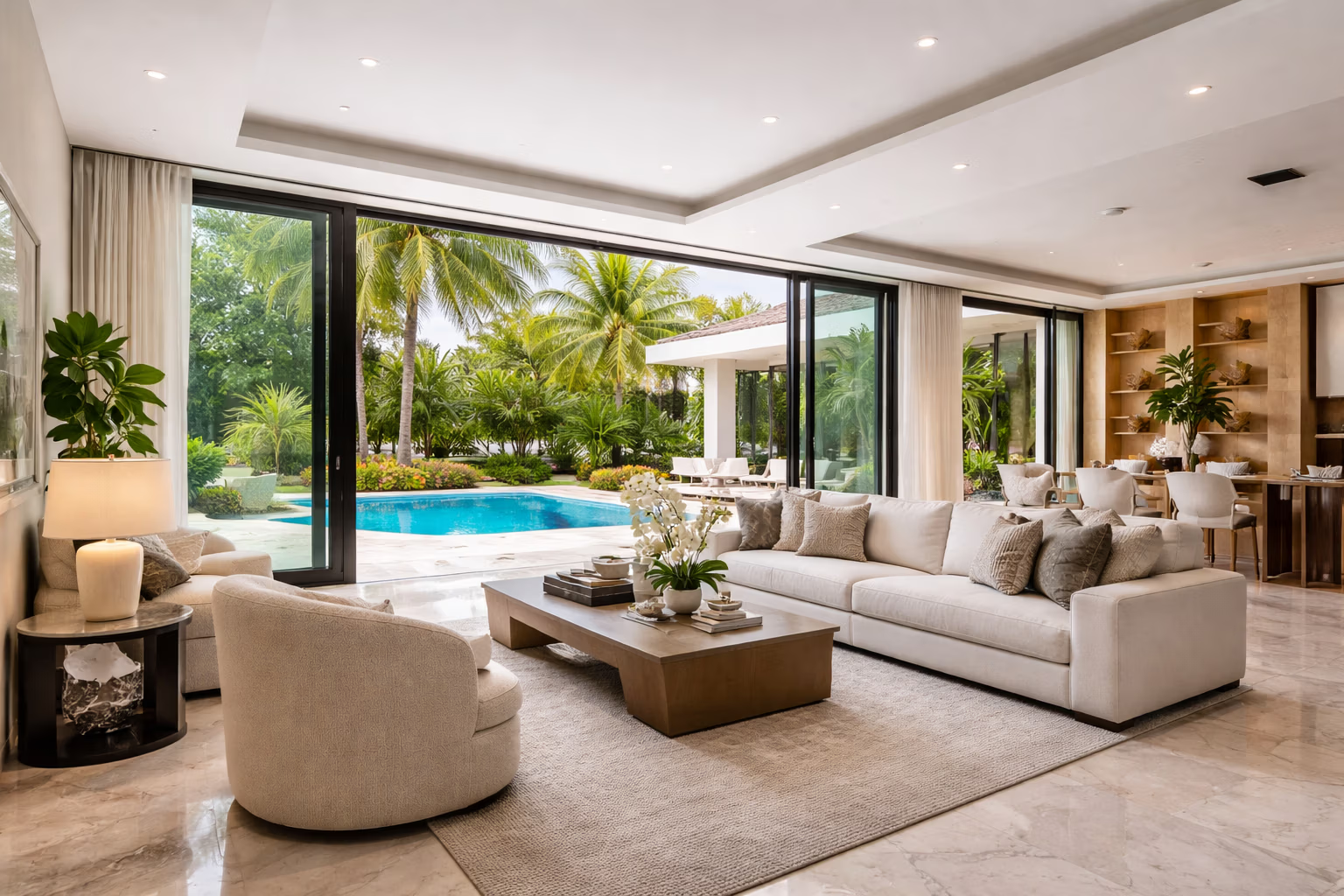
Selling in the Miami Real Estate Market: How to Maximize Your Net
Why Pricing Strategy Is the Most Valuable Thing Your Agent Does
The Miami real estate market is deeply informed. Serious buyers are tracking comps, watching DOM, and running their own analysis before they ever contact an agent. A home that enters the market overpriced by even 5% will lose the attention of the most qualified buyers during the first two weeks — the precise window when demand peaks and offers are strongest.
Price reductions signal weakness. Days-on-market accumulates stigma. By the time you correct to market, the buyers who would have competed for your home at fair value are under contract elsewhere. A data-driven CMA from a specialist who knows your specific micro-market is the most financially consequential decision in the Miami real estate market transaction.
A clean $1.1M offer consistently outperforms a contingency-heavy $1.15M offer by the time you reach closing. Net proceeds are the only metric that matters — not headline price.
Kevin Arango, P.A. — The Arango GroupThe Listing Presentation Standard in the Miami Real Estate Market in 2025
At Miami’s price points, buyers make decisions online before they ever step inside a property. Professional photography, licensed drone footage, 3D Matterport virtual tours, and compelling listing copy are the minimum standard — not a premium service. Any listing agent who treats these as optional is operating below the market standard and will cost you money.
Pre-Market Exposure: The Strategy Most Sellers Don’t Know About
Before your home reaches the public MLS, it should be actively marketed to a curated buyer network and targeted digital audiences. This pre-market phase consistently produces the cleanest, most competitive offers — particularly for waterfront properties and distinctive homes with limited direct comparables. An agent without an active buyer network cannot execute this strategy.
Staging and Landscaping ROI in the Miami Real Estate Market
A $15,000–$25,000 investment in professional staging, exterior pressure washing, fresh paint, and curated tropical landscaping routinely produces $50,000–$100,000 in final sale price uplift at Miami’s mid-market and luxury price points. The return is not uniform — an experienced listing agent will advise you specifically on which improvements yield returns in your neighborhood and which over-improved finishes will not recover their cost at your price point.
Timing the Miami Market: When to List
The Miami real estate market historically peaks between November and April, driven by snowbird relocation, international buyer visits, and domestic migration from cold-weather states. Listing during this window generates stronger competition and higher offers — particularly above $1.5M. An experienced agent will time your marketing launch to align with peak demand and ensure your digital presence is fully deployed before competing inventory hits the market in January and February.
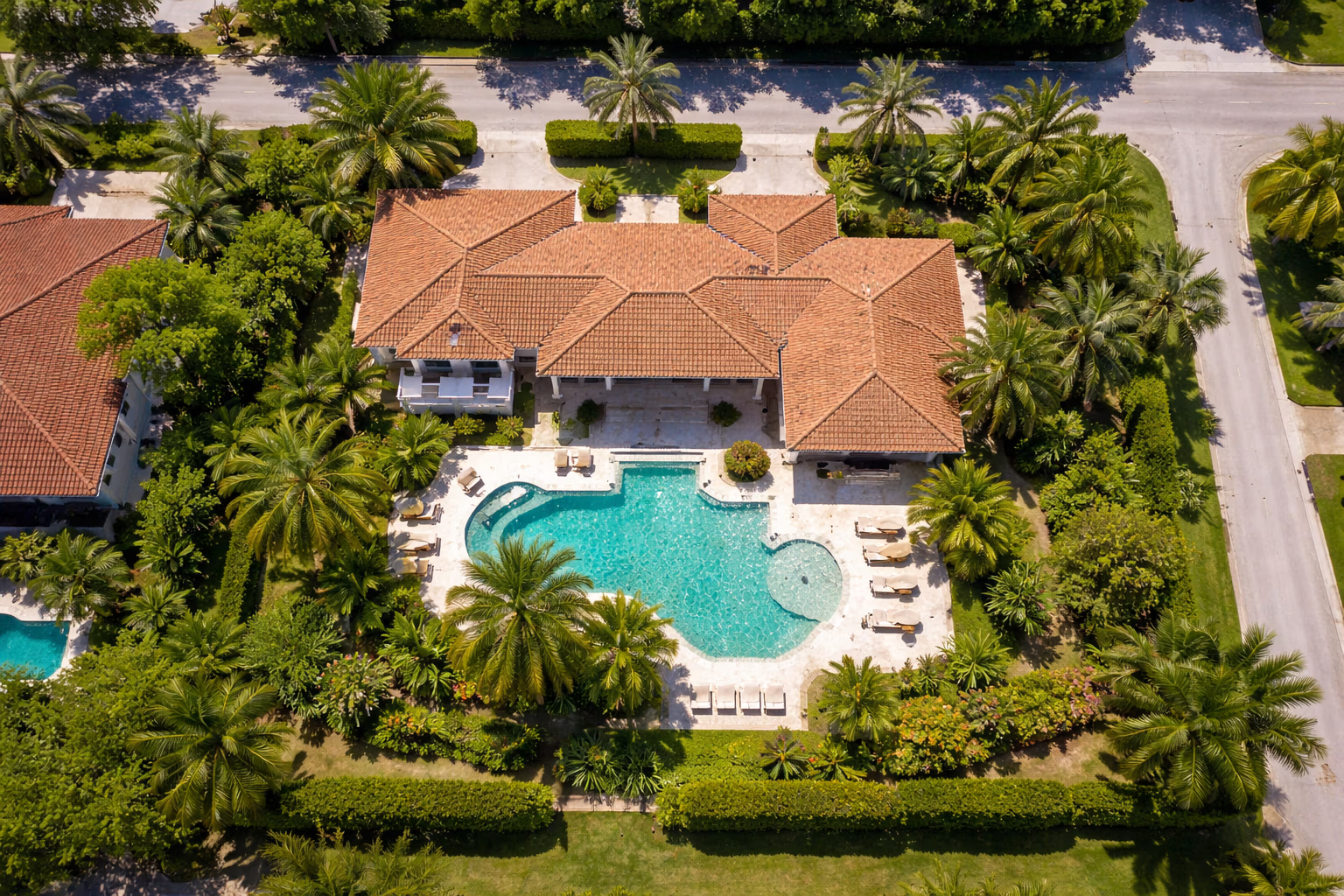
Miami Real Estate Market by Sub-Market: Where Does Your Budget Fit?
| Neighborhood | Price Range (SFH) | Waterfront | Schools | Best For |
|---|---|---|---|---|
| Palmetto Bay | $650K – $4M+ | Bay + Canal | Howard Dr K-8 / Palmetto HS | Waterfront value, families |
| Pinecrest | $1.35M – $5M+ | Very limited | Pinecrest K-8 / Palmetto HS | Estate lots, prestige |
| Coral Gables | $1.4M – $10M+ | Limited | Coral Gables HS | Walkability, architecture |
| Coconut Grove | $1.2M – $8M+ | Bayfront estates | Highly sought-after | Lifestyle, appreciation |
| South Miami | $480K – $950K | None | Good district options | Entry point, families |
| Wynwood / Edgewater | $380K – $1.4M (condos) | Edgewater bay views | Urban options | Investors, urban buyers |
For waterfront access at the best value-per-square-foot in the Miami real estate market, Palmetto Bay leads this comparison by a significant margin. Buyers who prioritize estate lot sizes and school prestige will find Pinecrest worth the premium. Those seeking urban walkability and architectural heritage should explore Coral Gables. See our dedicated pages: Palmetto Bay real estate agent, Pinecrest real estate agent, and Coral Gables real estate agent.
What the Miami Real Estate Market Data Won’t Tell You
The Condo Reserve Legislation Is Reshaping Buyer Calculations
Post-Surfside legislation has mandated structural inspections and full reserve funding for Florida condo associations above certain age and height thresholds. This is reshaping which buildings are financially viable for buyers. Special assessments in buildings with underfunded reserves can exceed $50,000–$200,000+ per unit. Always obtain the full condominium financials, current inspection reports, and reserve study before committing to any Miami condo purchase.
Off-Market Inventory Is Real — and Significant
Some of the most desirable properties in the Miami real estate market — particularly waterfront estates in Coconut Grove, Palmetto Bay, and Pinecrest — never appear on Zillow or the public MLS. They transact through agent-to-agent relationships. A hyperlocal agent with an active buyer network is the only path to this inventory.
Insurance Eligibility Is Becoming a Primary Deal Variable
Florida’s insurance market has tightened significantly. Properties with roofs over 15 years, aluminum wiring, polybutylene plumbing, or Federal Pacific electrical panels may be uninsurable or extremely expensive to insure with standard carriers. This directly affects a buyer’s monthly cost — and a seller’s ability to close. Sellers who address four-point inspection items before listing protect both their timeline and their net proceeds.
New Construction Doesn’t Always Outperform in the Miami Real Estate Market
Several Miami teardown-rebuild projects have been priced at speculative premiums that exceed supportable comparable values. Established homes on mature lots — particularly in canopy neighborhoods like Coconut Grove and Pinecrest — often offer better long-term value than new construction at the same price point. Mature tropical landscaping that would cost $150,000–$300,000 to recreate from scratch comes standard with established properties.
The Best Time to List in Miami: November Through April
Peak buyer activity in the Miami real estate market concentrates between November and April. This is when snowbird buyers are in residence, domestic relocators are actively searching, and international buyers schedule in-person trips. Sellers who list in this window with professional marketing fully deployed consistently outperform those who list in the summer months. An experienced agent will back-plan from your target list date and ensure everything — photography, pre-market exposure, MLS launch — executes at the right moment.
Additional Resources for Miami Real Estate Buyers and Sellers
Visit the Miami-Dade Property Appraiser for tax history and assessment records. Use the Miami-Dade School Locator for parcel-level school zone verification. Check flood zones at FEMA’s Flood Map Service Center. Review Miami REALTORS® monthly market reports for current inventory and pricing trends.
Miami Real Estate Market: FAQs for Buyers & Sellers
Ready to Move in the
Miami Real Estate Market?
Whether you are buying your first Miami home, upsizing to a waterfront estate, or selling a property you’ve held for years — the right agent changes the outcome. Kevin Arango combines 30+ years of business expertise with deep hyperlocal knowledge across South Florida’s most desirable communities. Visit www.thearangogroup.com to learn more.